Catalyst-Support Interactions and Interfacial Phenomena
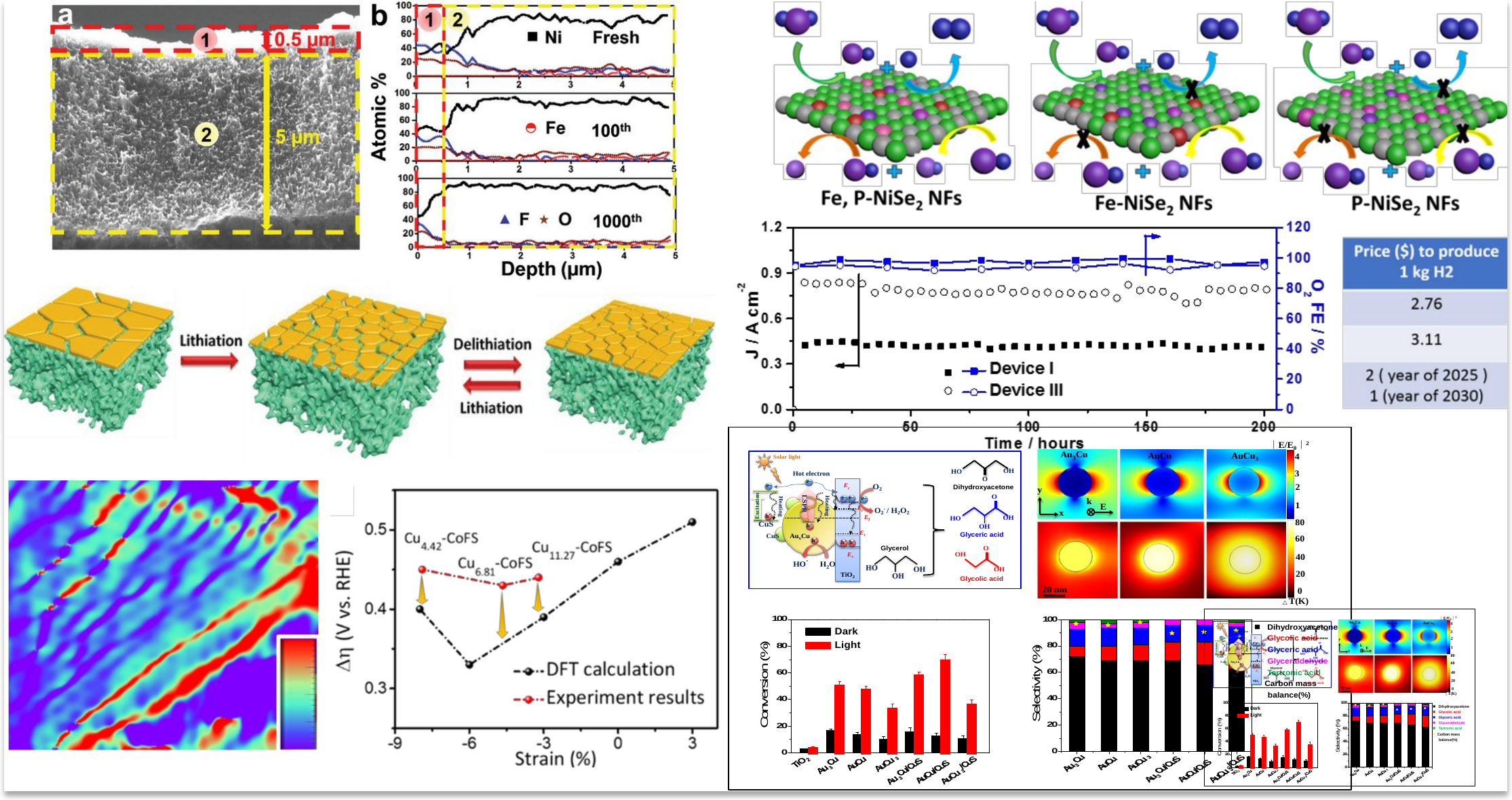
Solving the energy and environmental crisis requires materials that enable clean, scalable, and cost-effective energy production and storage. Our group decodes and engineers the interfacial phenomena that control performance in these systems. We study how the support changes the coordination environment, charge state, and stability of the metal it carries, from single atoms through clusters to nanoparticles, treating that progression as one design space. We also investigate local composition gradients, dynamic doping profiles, strain-mediated structural distortions, and photothermal hot-spot formation at complex interfaces. By revealing how these local effects govern charge transport, catalytic activity, and long-term stability, we uncover design principles of innovative catalysts and materials for next-generation electrochemical systems, including batteries, fuel cells, electrolyzers, and other systems for carbon dioxide reduction and hydrogen peroxide electrosynthesis.
Interface Electrochemical Process for Batteries and Catalysis
Research
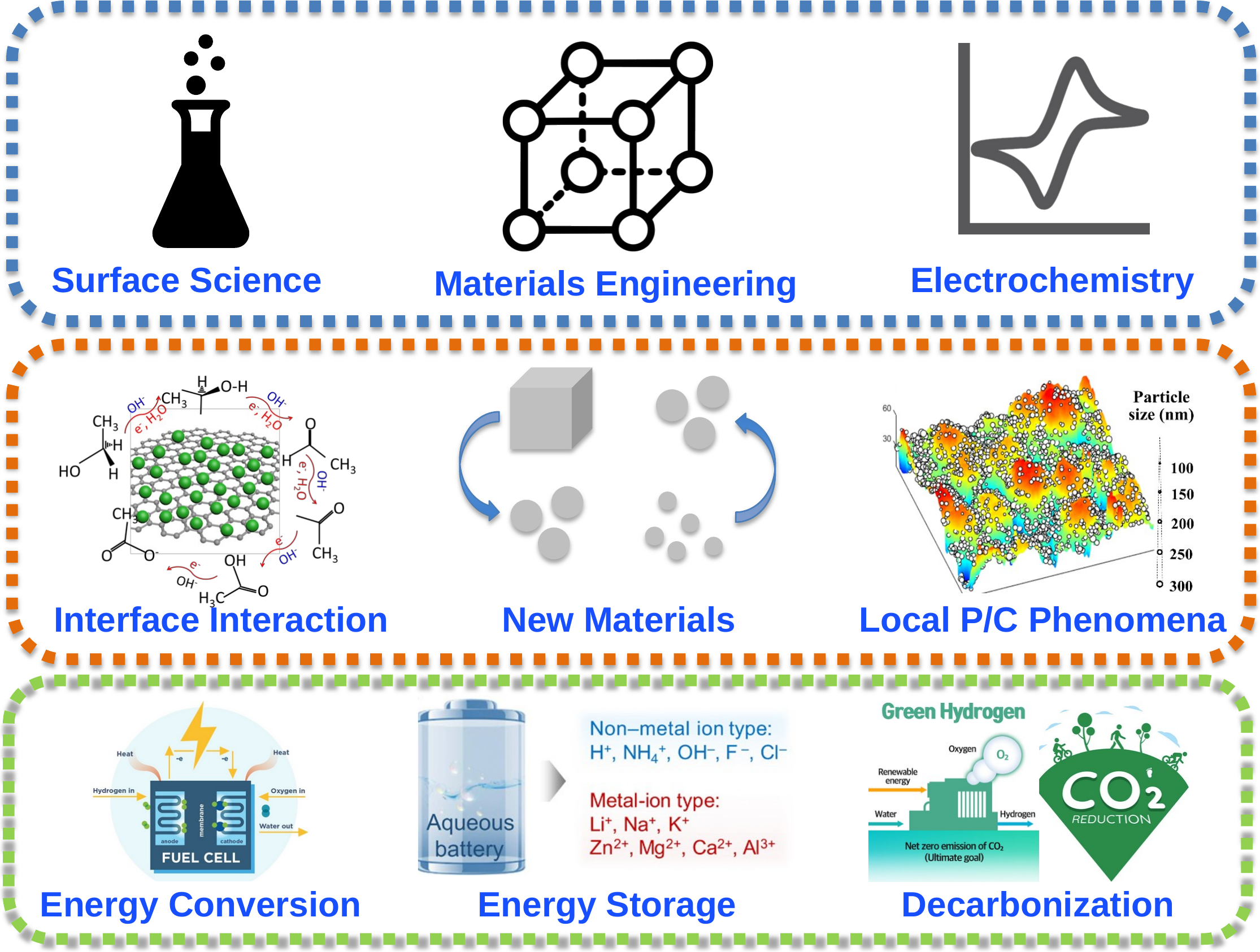
The Yang group designs functional materials at the nano and atomic scale and studies their behavior at solid-gas-liquid interfaces, where energy conversion and storage actually happen. We combine materials engineering, surface science, and electrochemistry to build materials with precisely controlled structure and composition and to understand the interfacial processes that set their performance. The research below is organized into four areas: programmable nanomanufacturing of catalysts and battery materials; catalyst-support interactions and interfacial phenomena; electrochemical processes in batteries and catalysis; and flexible electronics and photonics.
Yang Research Group
Advanced Materials & Renewable Energy at University of Central Florida
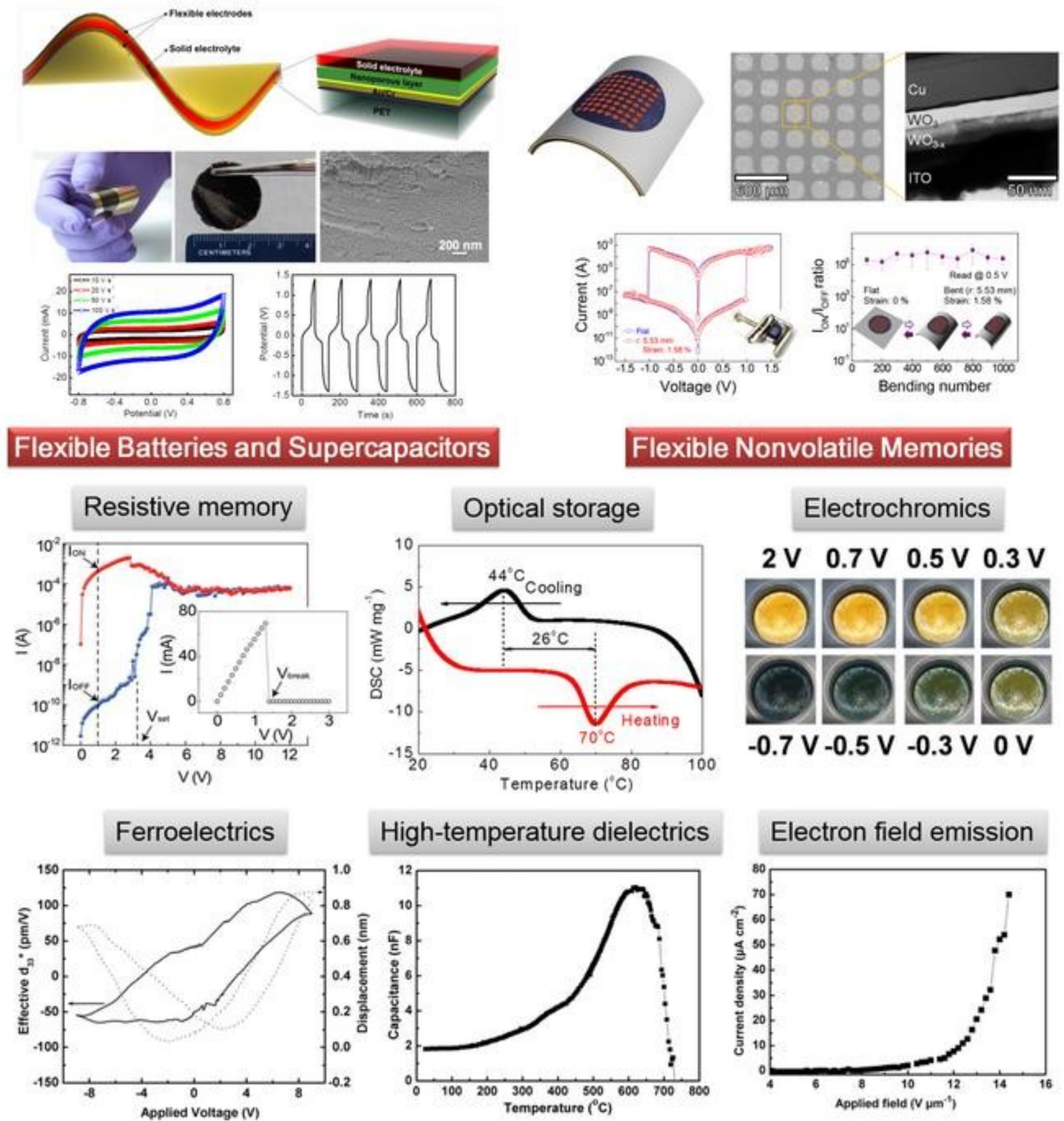
We are developing high-performance, flexible, and wearable thin-film electrodes that integrate seamlessly into next-generation energy, electronic, and photonic systems. Our research enables self-standing films with exceptional mechanical flexibility and robustness, providing a materials platform for flexible batteries, lightweight supercapacitors, and other deformable energy-storage technologies. We also design porous thin-film architectures with engineered charge transport and optical pathways for resistive memory, electrochromic smart windows, and adaptive optoelectronic devices. Expanding beyond energy storage, we use advanced materials and smart nanostructures for ferroelectric actuators, electron field emitters, multifunctional sensors, and photoluminescent devices, guided by a fundamental understanding of nanoscale size effects, interface coupling, and pore-mediated confinement.
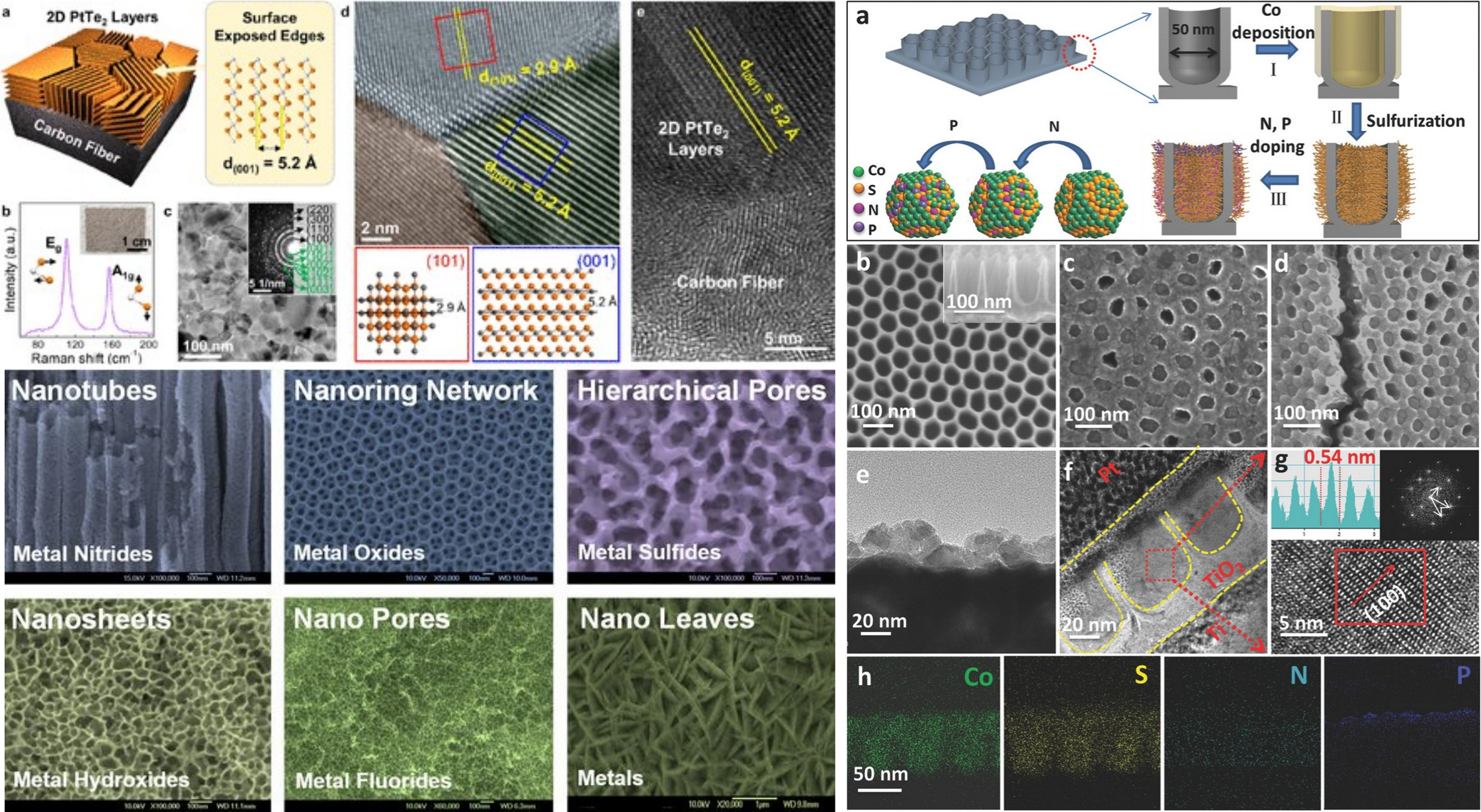
We develop scalable, low-cost, and programmable nanomanufacturing methods that control the structure and composition of energy materials across multiple length scales. Our approach creates precision-engineered two-dimensional materials, porous architectures, and heterogeneous nanostructures with tunable composition, crystalline order, and morphology. A central theme is catalyst-support interaction: we design metal catalysts from single atoms to clusters to nanoparticles on functionalized nanocarbon and metal compound (e.g., oxides, nitrides, sulfides, etc.) supports, tuning the interface to control activity, selectivity, and stability. This gives us material platforms with on-demand catalytic, electronic, optical, and energy-conversion and storage properties, and positions us to address grand challenges in sustainable energy and next-generation electrochemical systems.
Flexible Electronics and Photonics
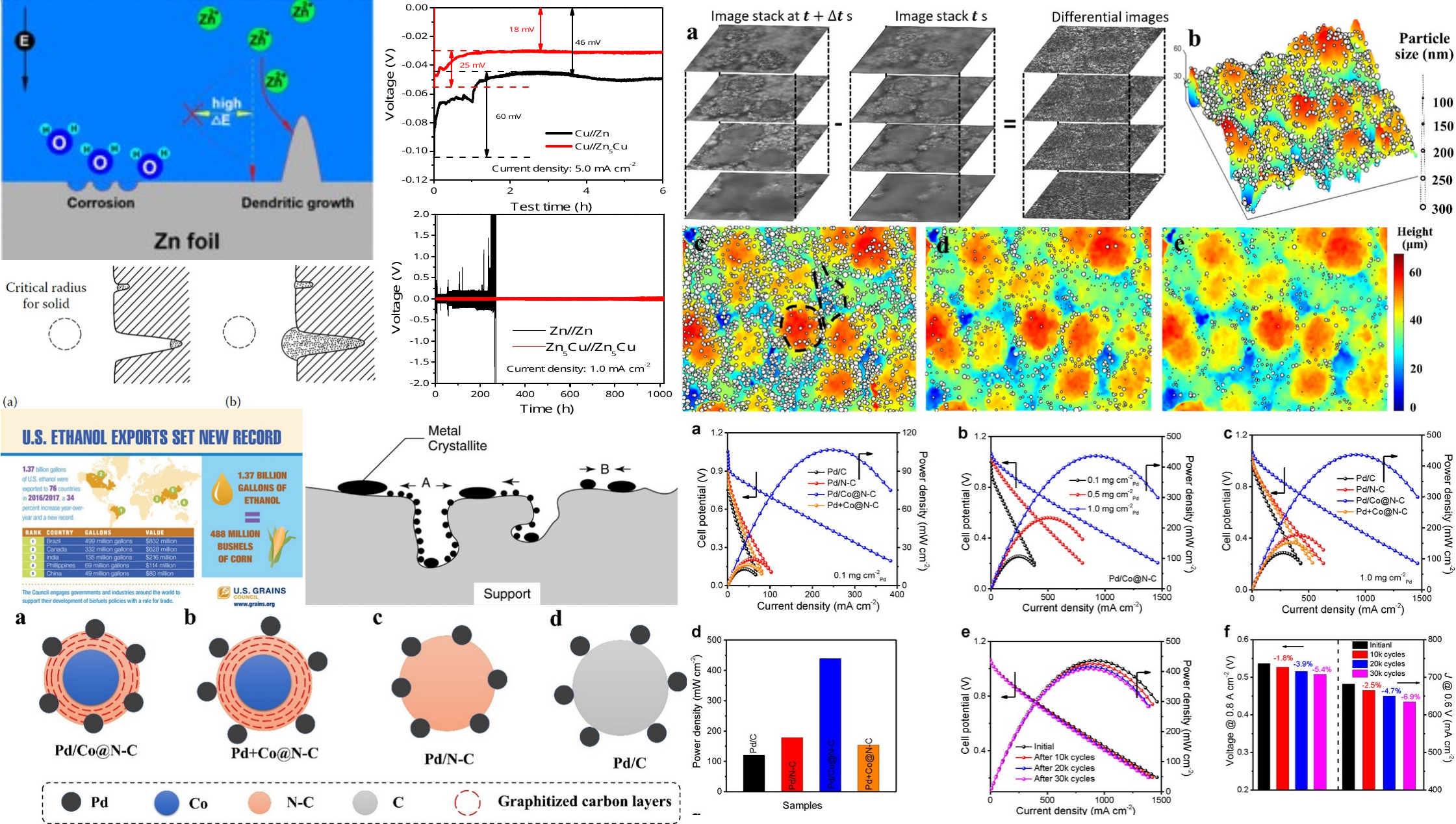
We study the multi-scale electrochemical processes that regulate how materials perform and degrade in advanced energy devices, including batteries, electrolyzers, and fuel cells. Our work places particular emphasis on heterogeneous nucleation and interfacial stability at the electrode-electrolyte interface, where local composition, ion solvation, interfacial structure, and electric fields together determine reaction selectivity, morphology evolution, and cycling stability in electrochemical systems. A major focus is dendrite-free aqueous batteries that use non-flammable electrolytes and inexpensive materials, addressing safety and cost for grid storage and mobility. We also explore electron-transfer dynamics and interfacial electronic interactions between catalysts and supports in fuel cells and electrolyzers. These insights guide the design of high-activity, robust, and durable systems for carbon dioxide electroreduction, hydrogen peroxide electrosynthesis, seawater electrolysis, and aqueous zinc batteries, from the laboratory scale toward membrane-electrode assemblies and kilowatt-scale devices.
Programmable Nanomanufacturing of Catalysts and Battery Materials